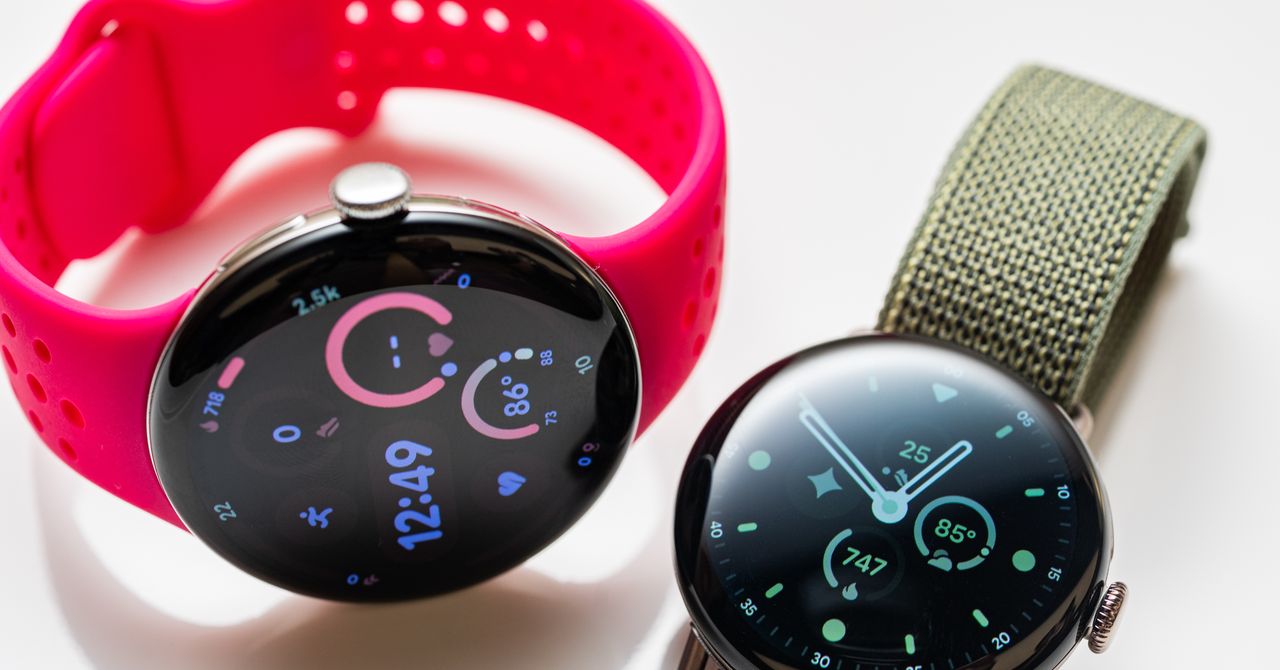
Google’s first smartwatch debuted just four years ago, and at the time, the company went to great lengths to stress the accuracy of the Pixel Watch’s heart rate sensor. Even if Google was late to the wearable party compared to peers like Apple and Samsung, that focus on heart rate seems to be paying off with new features that are yet to be seen on competing products.
On Wednesday, Google introduced the latest generation of its smartwatch, the Pixel Watch 5 (alongside the Pixel 11 smartphone family). The hot new health feature? Breathing Emergency Detection. Similar to the first-of-its-kind Loss of Pulse Detection feature introduced on the Pixel Watch 3, this new capability can be triggered by a variety of factors, like drug toxicity, accidents, severe pneumonia, and choking.
“Using a combination of data from the advanced sensors, including a PPG, accelerometer, and barometer, we’ve designed an AI-based algorithm running on device to detect a persistent drop in oxygen saturation and then call Emergency Services for you and even share your location,” says Francis Hoe, a product manager on Google’s Pixel Watch team.
This feature hasn’t been cleared by the Food and Drug Administration, which is why it’s not launching in the US at the moment; Google says it’s working with regulators to expand availability. It will only be available in select markets in the European Union to start. Google also says it’s not intended for people with preexisting respiratory conditions and isn’t designed to diagnose or treat medical conditions.
Courtesy of Google
You also don’t need a new Pixel Watch 5 to take advantage; Google’s bringing this feature to the Pixel Watch 4 as well. And two other big new capabilities are also coming to older devices: blood pressure and insulin resistance trends. These are coming to the Google Health app and will be available for anyone with a Fitbit Air, Pixel Watch 3, Watch 4, or Watch 5 later this fall.
“It might have felt strange—why are we harping about heart rate accuracy so much—back then,” Sandeep Waraich, senior director of Wearables at Google, tells WIRED. “We kept investing in that, and now it’s very improved, because all these large sensor models can detect these signatures, insulin resistance, blood pressure trends—but underneath, they need a really capable raw signal.”
Google is placing these features into a new umbrella category called Health Guardian, which includes existing features such as irregular rhythm notifications, high/low heart rate notifications, Loss of Pulse, and Sleep Breathing Quality. The idea is to put these capabilities in a place where users can easily see what they have turned on, similar to Google’s Personal Safety app on Pixel phones, which shows features like Emergency SOS, Safety Check, and Car Crash Detection in one place.