
Key Takeaways
- Criminals stole $30 million in violent crypto attacks through mid-2026, Chainalysis found.
- France logged 30 attacks in 2026 after a tax agency data breach exposed holder records.
- JUNALCO has made 200 arrests as France’s crackdown on crypto attacks continues into H2.
The crimes fall under a category security researchers call “wrench attacks.” The term comes from an old internet joke about hacking: no matter how strong a password is, a criminal can bypass it with a five-dollar wrench and a physical threat. In practice, that means home invasions, kidnappings, and hostage situations aimed at people who hold crypto assets.
Chainalysis explained in its latest study that the pattern is different from typical crypto crime. Most theft happens online through hacks, scams, and ransomware. Wrench attacks happen in person, often at a victim’s front door.
France Emerges as the World’s Hotspot
France has become the center of that shift. Chainalysis counted 30 publicly known violent incidents in the country through mid-2026, up from just 19 for all of last year. French Interior Minister Laurent Nunez said in June that authorities have documented more than 70 crypto-related violent incidents, a figure well above the public count. Nunez announced plans for a rapid alert system to protect people in the crypto industry who may be at risk.
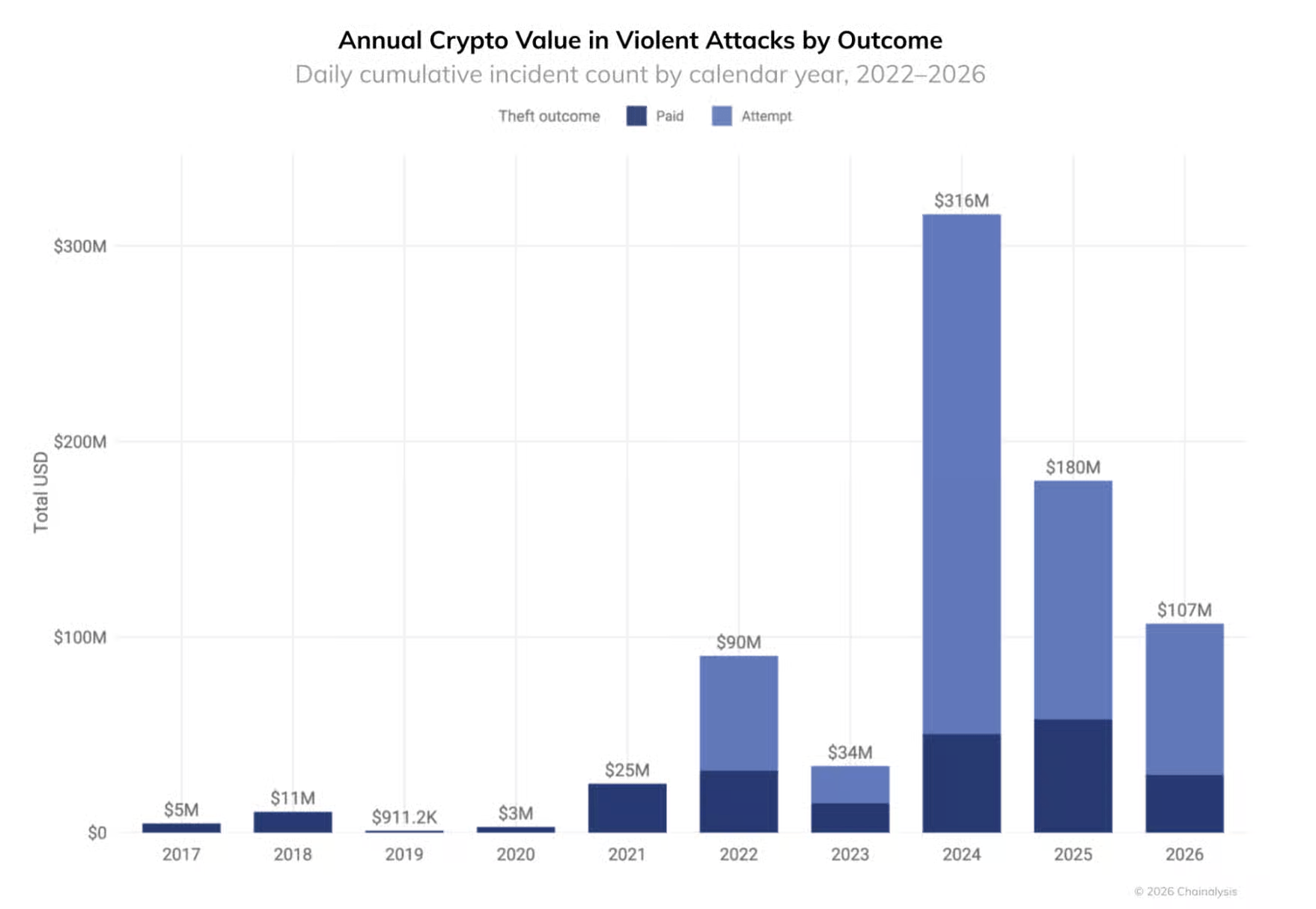
Chainalysis traced the jump in attacks in France to a data breach. A French tax official is accused of stealing and selling files on wealthy crypto holders that included names, addresses, phone numbers, and account holdings. Criminal groups are believed to have bought that information and used it to plan attacks. A second breach, disclosed by crypto tax firm Waltio in January, exposed roughly 50,000 more user records.
The numbers show how much that stolen data mattered. France averaged fewer than one attack a month before 2025. The blockchain intelligence firm Chainalysis‘s study found the rate rose to 1.9 attacks a month in 2025, then jumped to 4.6 a month in the first half of 2026.
Attackers Miss More Often in France
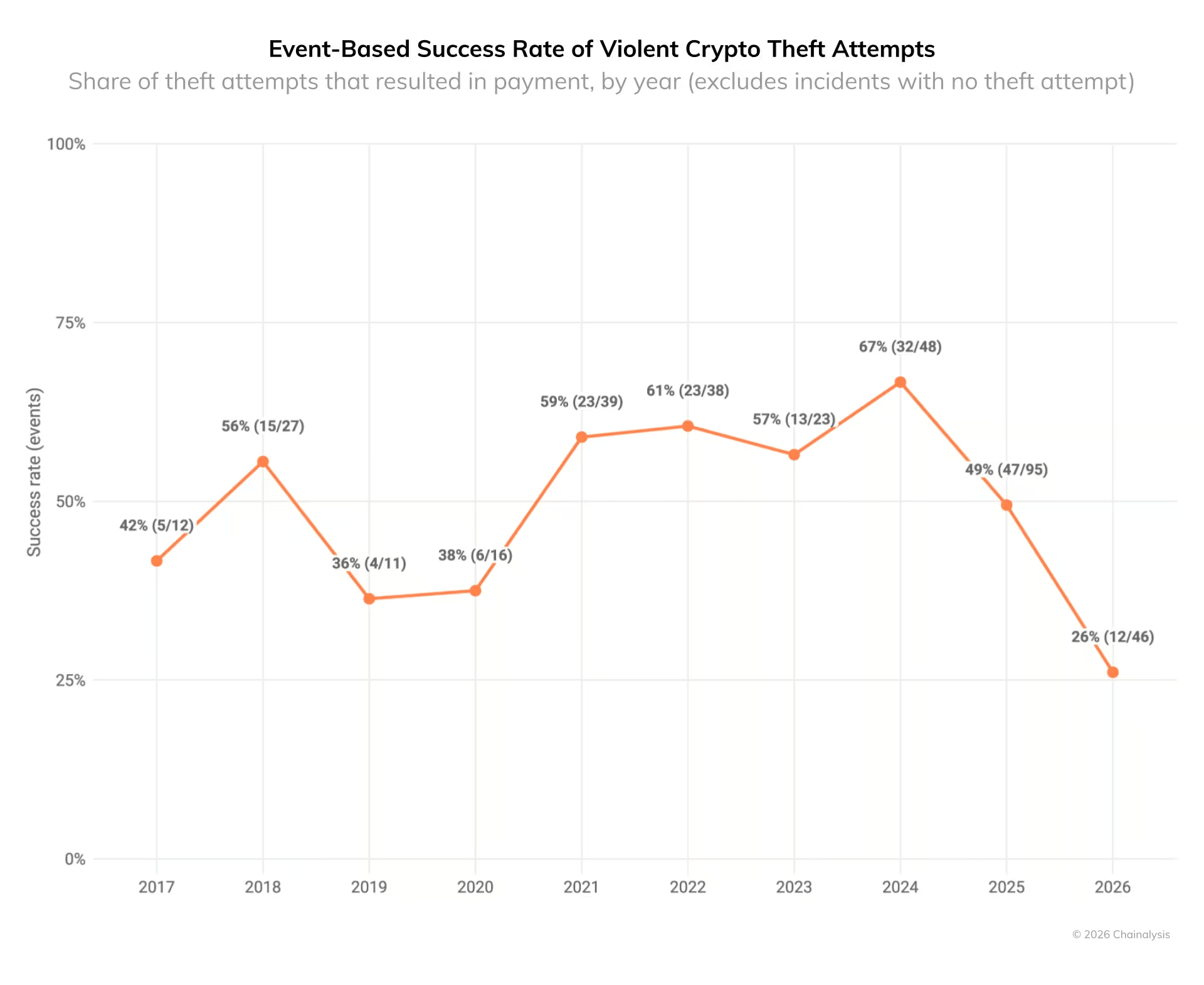
Not every attempt succeeds. Chainalysis reported that only 26% of violent theft attempts through late June resulted in a payout, down from 49% in 2025 and 67% in 2024. The report’s researchers linked the falling success rate directly to France, writing that the country’s attacks are “more numerous, more indiscriminate” and less often successful than the targeted attacks common in prior years.
The nature of the attacks is also changing worldwide. Home invasions made up 37% of documented incidents in 2026, up from 26% in 2023. Kidnappings grew too, from 39% of cases in 2023 to 52% now. Attackers have also started going after family members and associates instead of the crypto holder directly. Chainalysis found that tactic showed up in roughly a quarter to a third of cases globally, but in more than 40% of cases in France alone.
Stolen Funds Reveal Who’s Behind the Attacks
Once an attack succeeds, the stolen crypto has to move somewhere. Chainalysis tracked the money and found three tiers of criminal sophistication. Some attackers send stolen funds straight to a centralized exchange, a mistake that makes them easy for investigators to trace and catch. Others use decentralized exchange (DEX) platforms and cross-chain bridges to cover their tracks. A third group appears embedded in organized crime, with funds flowing through laundering networks tied to drug trafficking and terrorist financing.
JUNALCO Cracks Down on Organized Crime
French authorities are treating the wave as organized crime. The country’s specialized anti-organized-crime unit, known as JUNALCO, has made around 200 arrests and filed 88 indictments tied to crypto-related attacks, with 75 suspects held in pretrial detention.
Chainalysis explained in the latest crime analysis that the risk mostly falls on local residents rather than tourists. In France, 93% of victims with known residency were locals, a pattern researchers said points to careful planning by attackers, whether through leaked data, social media, or blockchain tracking.
Holders Face Pressure to Lock Down Security
For crypto holders, the report’s advice is straightforward. Avoid publicizing large holdings, keep custody arrangements private, and treat any data breach involving personal information as a security risk, not just a privacy one.
The second half of 2026 will show whether France’s crackdown slows the pace. Watch for updates from JUNALCO on new arrests, any rollout of the rapid alert system Nunez proposed, and Chainalysis’s year-end totals, which will confirm whether 2026 becomes the worst year on record for violent crypto crime.