Key Takeaways
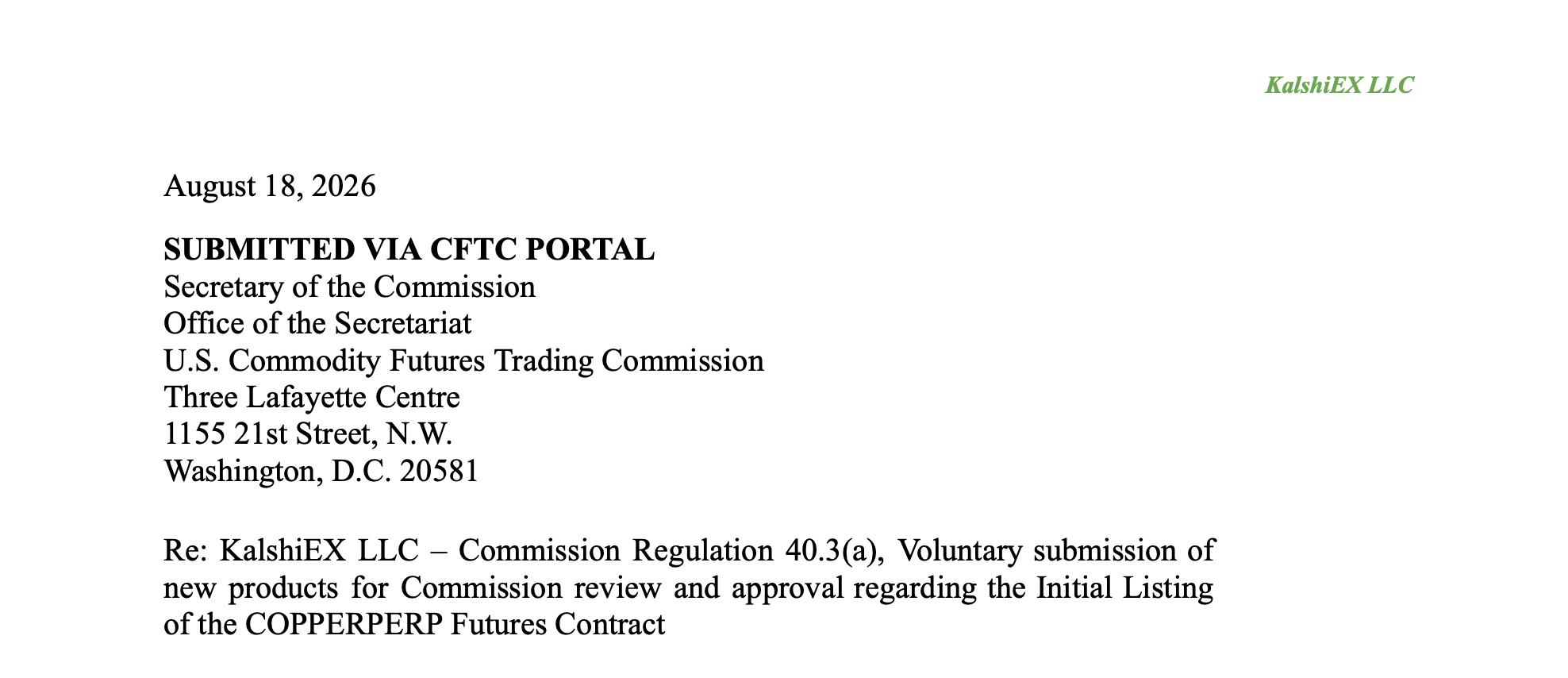
- Kalshi filed Aug. 18 for US500 and COPPERPERP perpetual futures.
- Kalshi’s contracts could broaden U.S. access to continuous leveraged market exposure.
- The CFTC must approve, modify or reject Kalshi’s two filings before trading begins.
The two Aug. 18 filings seek permission to list the US500 and COPPERPERP contracts. KalshiEX LLC is a CFTC-registered designated contract market, or exchange. Neither contract can begin trading unless the CFTC authorizes it.
What Kalshi Wants to List
A perpetual future, often called a perp, lets a trader bet on prices rising or falling without buying the shares or metal itself. Unlike a standard futures contract, it has no set end date. Kalshi describes it in its filings as a “cash-settled futures contract with no fixed expiration or delivery date.”
Instead of expiring, the contract uses a periodic funding payment between traders on opposing sides. That payment is designed to pull its price back toward the underlying market. In plain terms, the structure aims to keep an always-open wager on the real market from drifting too far away from it.
US500 would track the MerQube US Large Cap Index, a benchmark made up of 500 of the largest U.S.-listed companies. One contract would equal $1 per index point and trade from Sunday evening through Friday afternoon, with cash payments rather than stock delivery.
COPPERPERP would track copper’s spot price in dollars per pound using a price feed from Pyth Network. Each contract would represent 1,000 pounds of copper, but it too would settle only in cash. Kalshi proposes a 25,000-contract cap on net long or short positions, with exemptions available for some legitimate hedging and spread trades.
Why Copper and Stocks Matter
The filings frame the products as tools for companies and investors with exposures that do not end on a quarterly expiration date. Copper is a vital industrial input in wiring, construction, vehicles, and data-center equipment. A manufacturer worried about sustained copper costs could use a contract designed to stay open instead of repeatedly replacing expiring positions.
Kalshi argues that a perpetual contract can “eliminate roll cost and roll-date basis risk” for users with ongoing exposure. Dated futures still offer features that some traders need, including clear settlement dates and the ability to trade the relationship between different contract months.
The stock-index contract presents another test. It would give traders nearly continuous weekday access to a broad U.S. equity benchmark, but the index itself is calculated only during regular stock-market hours. The prediction marketplace Kalshi’s proposed funding calculation would use pricing from those regular hours, while the contract could continue trading overnight.
Regulators Hold the Next Move
Kalshi chose the CFTC’s voluntary review path under Regulation 40.3 rather than simply self-certifying the contracts. The company says it intends to list them “shortly following approval by the Commission,” making the U.S. regulatory agency’s decision the immediate milestone.
The filings also sit within a wider argument over how U.S. regulators should classify perpetual contracts. Kalshi says its products are futures because they are standardized, publicly traded, and centrally cleared. CME Group has challenged the CFTC’s approach to Kalshi’s earlier bitcoin perpetual product in federal court, arguing that perpetuals should instead be treated as swaps, a separate category with different rules.
For now, the practical questions are whether the CFTC approves either filing, what changes it may request, and whether traders use the new products alongside established equity-index and copper futures. The answer will help show whether a trading format popularized in crypto markets can gain a durable place in regulated U.S. finance.