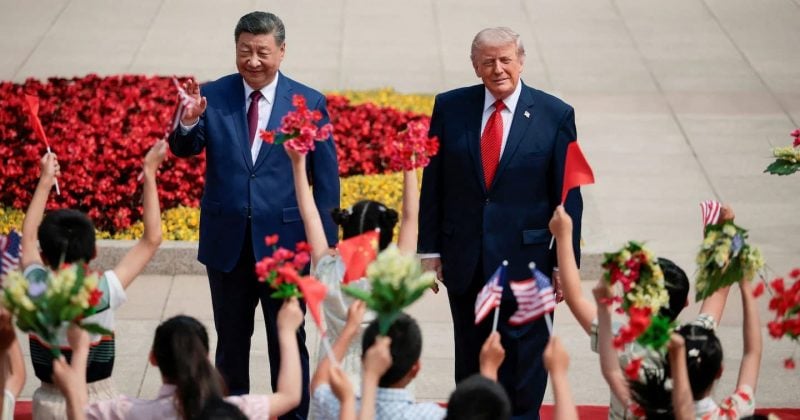
Xi Jinping and Donald Trump walked away from their Beijing summit with something markets tend to appreciate more than grand bargains: predictability. The two leaders committed to a new framework for what they’re calling “constructive strategic stability” between the US and China.
No major agreements were signed. No dramatic concessions were made.
What actually happened in Beijing
The summit positioned Xi as a leader operating at peak domestic authority while seeking to project calm on the world stage. Both sides emphasized stability in the bilateral relationship, with the new framework expected to guide US-China interactions for at least three years.
Xi made clear that Taiwan remains what he called the “most important issue” in US-China relations. The implication was barely veiled: mishandling the Taiwan question could trigger serious conflict between the two largest economies on earth.
Trump, for his part, extended an invitation for Xi to visit the White House in September. That follow-up meeting would represent an attempt to institutionalize the stability both sides are publicly courting.
The meeting took place amid escalating US-Israel tensions with Iran and an ongoing global energy crisis that has put fresh emphasis on keeping the Strait of Hormuz, through which roughly a fifth of the world’s oil passes, open and operational. Analysts from institutions including CSIS, CFR, and PBS have characterized the summit’s outcome as a fragile détente, one built on managed competition rather than genuine rapprochement.
Why crypto markets should pay attention
The framework agreed upon in Beijing suggests a continuation of managed competition rather than immediate economic decoupling. A hard decoupling scenario would likely trigger capital flight, tighter financial conditions, and a risk-off environment hostile to speculative assets like Bitcoin and altcoins.
Managed competition, by contrast, keeps the plumbing of global finance largely intact. Dollar-denominated stablecoin flows continue moving through Asian exchanges. Hong Kong’s evolving crypto regulatory framework, which Beijing has tacitly permitted as an experiment, remains viable.
Bitcoin has historically been sensitive to macro geopolitical shocks, particularly those involving US-China dynamics. The 2019 trade war escalation coincided with Bitcoin rallying as a perceived hedge against fiat instability, but prolonged uncertainty eventually weighed on broader crypto markets as risk appetite dried up.
What investors should watch next
The September White House visit, if it materializes, becomes the next major checkpoint. A cancelled or postponed meeting would signal that the Beijing framework is already fraying.
Taiwan remains the wildcard that could override everything else. Xi’s explicit warning about the island’s centrality to the relationship means any shift in US policy regarding Taiwan could rapidly unwind whatever goodwill the summit generated.
China’s stance on crypto has oscillated between outright hostility and selective tolerance through Hong Kong. A stable US-China relationship gives Beijing less incentive to use crypto crackdowns as a tool of economic nationalism. Conversely, deteriorating relations could see China tighten the screws on Hong Kong’s digital asset ambitions as part of broader economic retaliation.